




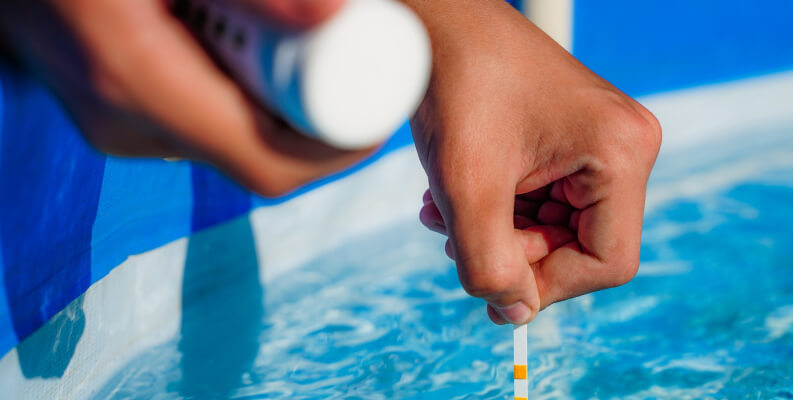
When you get a water test back, you get a list of numbers: free chlorine, pH, alkalinity, calcium hardness, stabilizer. Here’s what each one actually tells you, and which ones matter most for pools in Henderson and Las Vegas specifically.
Free chlorine (target: 1-3 ppm)
This is your active sanitizer, the chlorine actually available to kill bacteria and algae right now. Low readings mean the pool is under-protected even if the water looks clear. In summer heat, chlorine burns off faster from UV exposure, so pools here often need more frequent dosing than the same pool would in a milder climate.
pH (target: 7.4-7.6)
pH affects how well your chlorine actually works and how comfortable the water feels on skin and eyes. High pH makes chlorine less effective and encourages scale formation, which is already a bigger risk here due to hard water. Low pH corrodes metal equipment and can etch plaster.
Total alkalinity (target: 80-120 ppm)
Think of alkalinity as pH’s stabilizer. When it’s out of range, pH swings unpredictably even after you correct it, which is why a pool can seem to “fight” every chemical adjustment. This is usually the first thing we check when a customer says they’ve been adding chemicals and nothing sticks.
Calcium hardness (target: 200-400 ppm)
This is the one that matters more here than almost anywhere else. Henderson and Las Vegas tap water already runs hard, so pools here often start closer to the high end of the range than pools filled with softer municipal water elsewhere. Too high, and you get the scale and cloudy-white staining we cover in our chemical balancing guide. Too low, and the water becomes corrosive to plaster and equipment.
Stabilizer / cyanuric acid (target: 30-50 ppm)
Stabilizer protects chlorine from breaking down in direct sunlight, which matters enormously with as much sun exposure as Las Vegas pools get. Too little, and you’re burning through chlorine constantly. Too much, and chlorine stops working effectively no matter how much you add, a problem known as chlorine lock.
Why we test rather than guess
These five numbers interact with each other, adjusting one without checking the others is how a lot of DIY chemical balancing goes sideways. Every maintenance visit includes a full water test, so adjustments are based on what your pool actually needs that week, not a generic dosing schedule.


Comments are closed